
Choosing the right deck railing is a crucial decision for any outdoor space. The railing you select shapes how your deck looks, feels, and functions—affecting safety, maintenance, visibility, and long-term durability. A well-matched deck railing ties the design together, while the wrong one can limit how you use your space.
Whether you are building a new deck or upgrading an existing one, understanding your options helps you make a decision that lasts. Knowing the types of deck railing available is the first step when you start building your outdoor area.
Why Deck Railing Choice Matters
Deck railings are not just a finishing detail. They serve both structural and aesthetic purposes simultaneously.
An effective railing system should:
- Comply with safety codes and local building codes
- Complement the style of your home and deck
- Withstand local weather conditions
- Match your preferred level of maintenance
Partnering with an experienced contractor like Green Side Up Contracting ensures your railing is properly integrated into the overall deck construction process, including secure installation of railing posts and necessary additional support elements, rather than being treated as an afterthought.
Deck Railing Codes and Safety Requirements
Most local building codes mandate railings on decks more than 24 inches (about 60 cm) above the ground. Typical requirements include:
- Minimum deck railing height (generally 36–42 inches) to ensure safety and structural integrity, including stair railings and handrail heights on stairs
- Maximum baluster spacing (usually no more than 4 inches) to prevent accidents involving children or pets
- Railing systems must withstand specified force loads for safety
A deck guardrail is essential to prevent falls, especially on elevated decks and porch railing applications. Always verify your municipality’s specific safety codes before beginning your project. Working with a professional contractor guarantees your railing is installed correctly and compliant with local bylaws.
Related Article: Ontario Deck Building Code: Essential Guidelines for a Safe and Compliant Deck
Wood Deck Railing
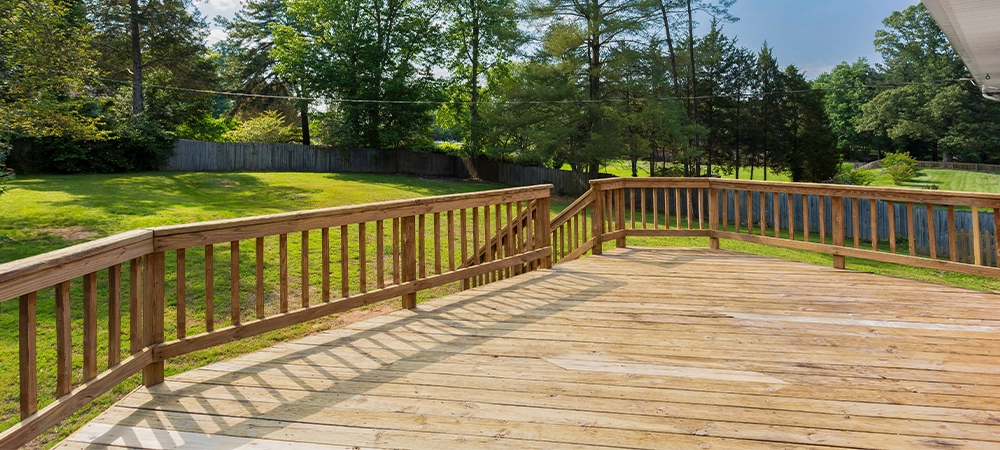
Wood deck railing is a timeless choice known for its natural appearance and adaptability. Common lumber options include pressure-treated wood, cedar, and redwood, all offering natural resistance to rot and insects.
Why Wood Railings Remain Popular
Wood is easy to customize, allowing flexible baluster spacing, height, and rail design. It pairs beautifully with wood decking and offers a warm, classic look.
Key benefits:
- Highly customizable height, spacing, and design
- Warm, natural aesthetic
- Complements wood decking materials and individual boards
Considerations Before Choosing Wood
Wood requires regular upkeep, such as sealing or staining, to preserve its quality and prevent damage. Proper installation involves drilling pilot holes to avoid splitting and securely fastening all components, including brackets and railing posts for additional support.
Best suited for:
- Homeowners who desire a classic look and customizable design
- Decks where matching wood deck railing with lumber is essential
- Projects prioritizing structural integrity
Maintenance Tips:
- Perform annual inspections for loose screws or damage
- Reseal or repaint every 1–3 years
- Clean with mild soap and water
Popular Wood Railing Styles: Traditional picket, horizontal slat, lattice, and custom-carved balusters
For more on deck materials, see our guide to the best wooden decking board options.
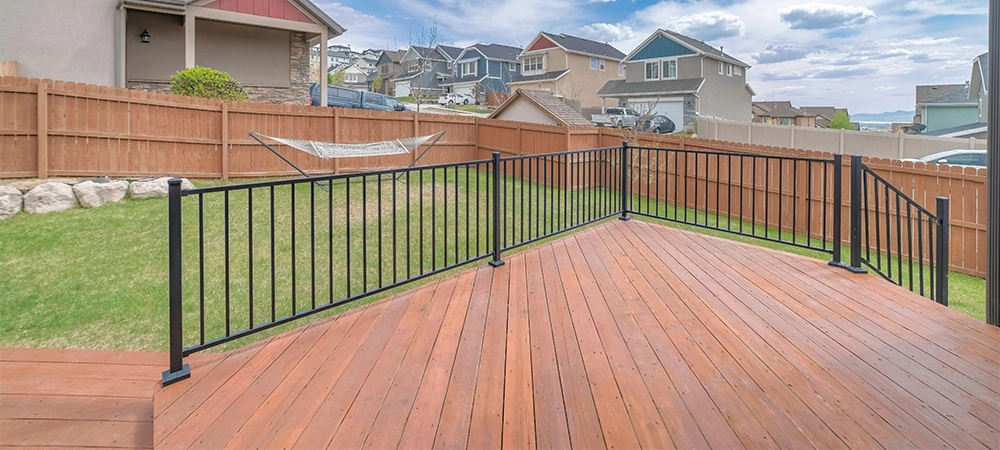
Aluminum Deck Railing
Aluminum deck railing offers exceptional durability with minimal upkeep. Powder coating adds extra protection against corrosion and weathering.
Why Aluminum Is a Smart Choice
Aluminum is strong, lightweight, and rust-resistant, making it ideal for long-lasting outdoor use. It often comes as pre-assembled panels, simplifying installation.
Advantages include:
- Very low maintenance
- Strong yet lightweight
- Long lifespan with minimal care
Design Notes
Aluminum railings provide a sleek, modern style but may offer less customization than wood. Aluminum railing systems typically include structural hardware designed for safety and durability.
Best suited for:
- Modern or contemporary decks
- Homeowners seeking low-maintenance outdoor railing options
- Elevated decks requiring durable, code-compliant safety features
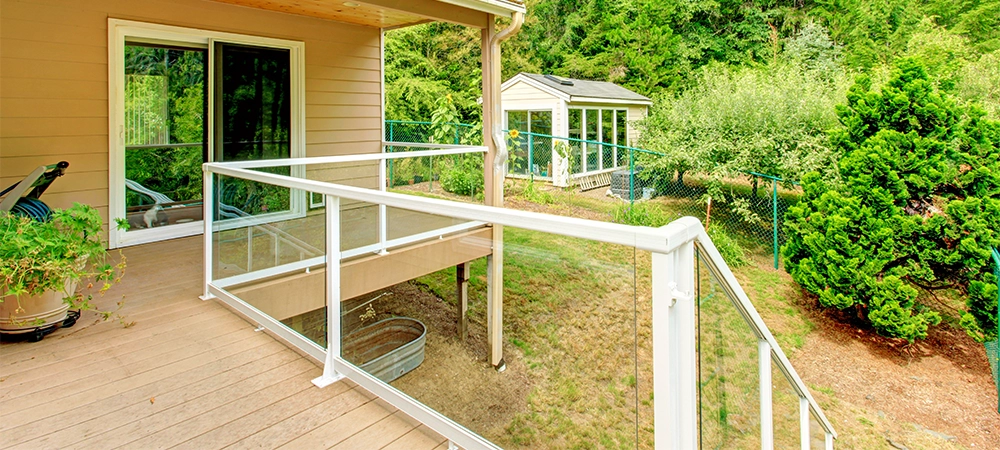
Glass Deck Railing
Glass railing systems maximize visibility and provide a clean, open aesthetic. They use tempered or laminated glass for safety and can be framed with aluminum or other metals.
What Makes Glass Panel Railings Stand Out
Glass panels offer unobstructed views while meeting safety codes. They fit well with modern designs and present a stylish alternative to traditional railings.
Key benefits:
- Clear, unobstructed views
- Modern, upscale appearance
- Compatible with aluminum or metal framing
Maintenance Considerations
Glass requires regular cleaning to maintain clarity and is generally more expensive than other railing types.
Best suited for:
- Properties with scenic views
- Contemporary deck designs
- Homeowners prioritizing both aesthetics and safety
Related Article: Spring Deck Revival: The Essential Restoration Checklist After Winter
Composite Deck Railing
Composite deck railing combines wood fibres and plastic to replicate wood’s look without the extensive maintenance.
Why Composite Is Increasingly Popular
Composite railings resist rot, insects, and moisture. They maintain their colour and structural integrity over time.
Benefits include:
- Low maintenance compared to wood
- Consistent finish and quality
- Resistant to weather-related damage
Limitations to Keep in Mind
Composite railing options may have limited style and colour variety compared to wood.
Best suited for:
- Homeowners seeking a wood-like appearance with less upkeep
- Decks exposed to harsh weather conditions
- Long-term, low-maintenance outdoor spaces
Related Article: Why We Choose Composite Decking Over PVC: Side-to-Side Comparison
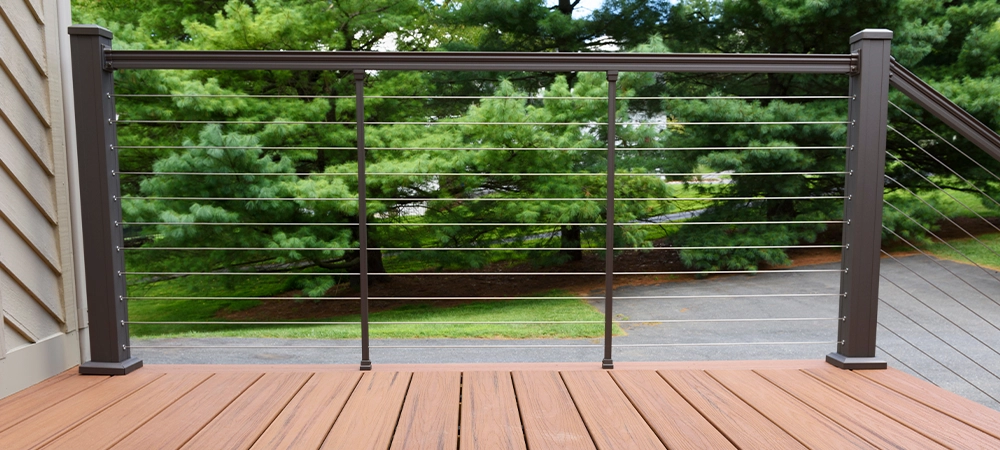
Cable Deck Railing
Cable railings use stainless steel cables instead of traditional balusters, offering an industrial-chic, minimalist look.
What Makes Cable Railings Unique
Cable railings provide open sightlines and modern aesthetics. Proper tensioning and spacing are critical to comply with safety codes.
Key benefits:
- Open and modern appearance
- Durable, strong materials
- Minimal visual obstruction
Important Considerations
Installation requires precise measurements, drilling pilot holes, and structural hardware to maintain safety and stability.
Best suited for:
- Contemporary deck designs
- Elevated decks with scenic views
- Homeowners wanting a minimalist railing style
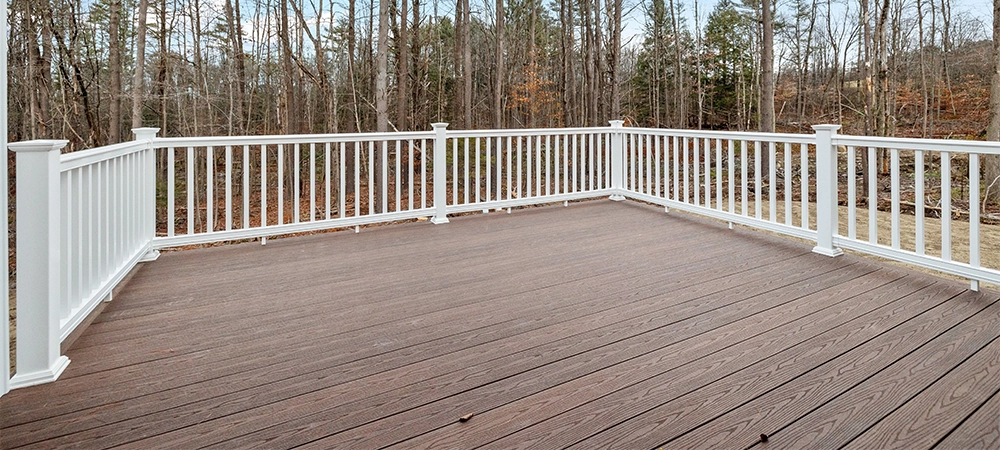
Vinyl Deck Railing
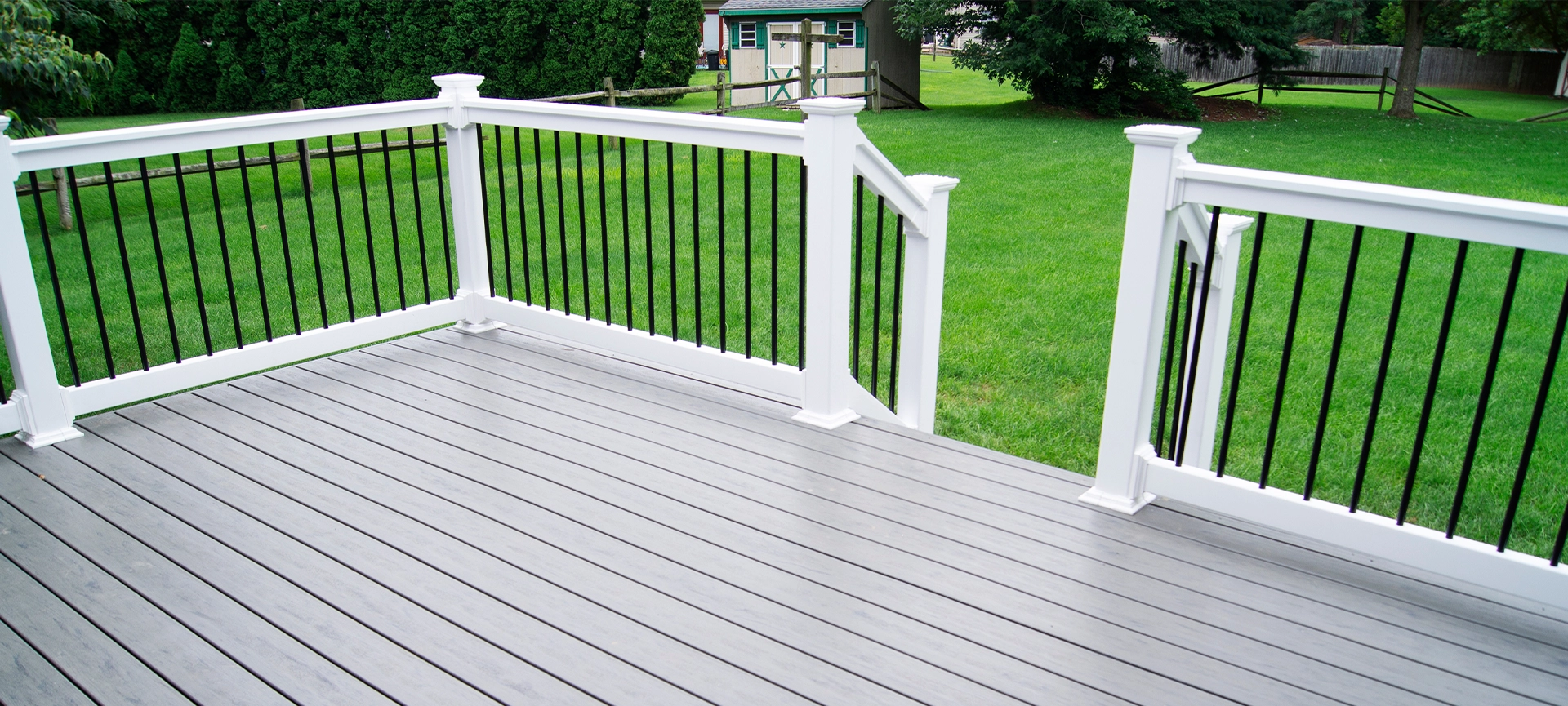
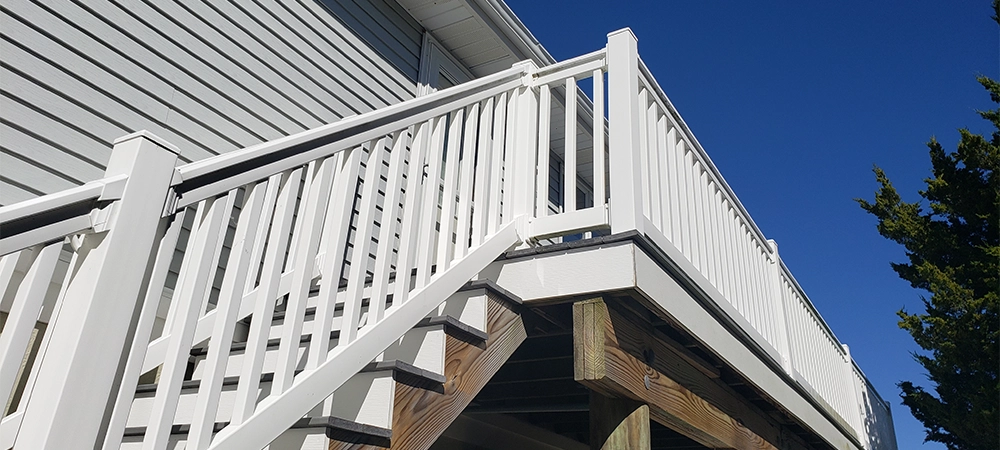
Vinyl (PVC) railing provides durability and ease of maintenance. It resists rot, moisture, and insects.
Why Vinyl Is a Dependable Option
Vinyl requires minimal upkeep, does not need painting or staining, and maintains a clean, uniform look.
Advantages include:
- Very low maintenance
- Clean and consistent appearance
- Long-lasting material
Design and Style Limitations
Vinyl railings often come in standard colours with limited customization options.
Best suited for:
- Homeowners seeking minimal upkeep
- Traditional-style decks
- Budget-conscious, long-term solutions
What Are the Best Eco-Friendly Deck Railing Materials?
For environmentally conscious choices, consider:
- Composite railings made from recycled wood fibres and plastic
- Aluminum railings, which are highly recyclable
- PVC and vinyl with recycled content and recyclability at the end of life
Ask Green Side Up contractors about eco-friendly certifications and options.
Popular Deck Railing Accessories and Upgrades
Enhance your deck’s style and safety with:
- Drink rails: Wide top rails doubling as drink holders
- Post cap lights: Solar or electric lighting for ambiance and safety
- Privacy screen for deck railing: Lattice, frosted glass, or privacy screen panels for added seclusion
- Planter boxes: Built-in or attachable greenery
- Decorative post caps: Add protection and style as finishing touches
These can be integrated during installation or added later.
Choosing The Right Railing For Your Deck
Consider:
- Maintenance expectations: Aluminum, composite, and vinyl offer low upkeep
- View and openness: Glass and cable railings maintain clear sightlines
- Design style: Wood suits traditional homes; metal and glass fit modern aesthetics
- Budget: Wood is often more affordable upfront; glass and cable systems tend to cost more
- Durability: Composite, aluminum, and vinyl withstand harsh weather better
Typical Deck Railing Price Comparison
| Railing Type | Upfront Cost | Maintenance Level | Durability | Customization |
|---|---|---|---|---|
| Wood | $ | High | 10–20 years | High |
| Aluminum | $$ | Very Low | 20+ years | Moderate |
| Glass Panel | $$$ | Moderate | 20+ years | Moderate |
| Composite | $$–$$$ | Low | 20+ years | Limited |
| Cable | $$$ | Low | 20+ years | Moderate |
| Vinyl (PVC) | $–$$ | Very Low | 20+ years | Limited |
*With regular sealing and staining.
Matching Railing With Deck Construction
Railing should be integrated with deck framing and layout to maintain structural integrity. Proper post placement, attachment points, and compliance with safety codes are essential. Installing blocking between joists provides additional support for railing posts and helps secure the railing firmly. This careful integration is a key part of successful deck construction.
Deck Railing Installation: DIY or Professional?
Installing deck railing for safety and style involves using the right tools and following proper steps. Some systems are DIY deck railing-friendly, especially pre-assembled panels, while others require professional expertise due to railing installation complexity.
Professional installation ensures:
- Securely attached posts and rails with proper brackets
- Compliance with safety codes like the International Residential Code and local codes, including those relevant to deck railing height Ontario
- Use of structural hardware and fasteners
- Proper drilling of pilot holes and avoiding loose screws
Discuss your skills and budget with a contractor to decide the best approach.
Related Article: How to Install Deck Railing for Safety and Style: Complete DIY Guide
When To Upgrade Your Deck Railing
Signs you need an upgrade:
- Loose or unstable posts or loose screws
- Rotting, cracking, or damaged materials
- Rust or corrosion on metal components
- Outdated design or safety concerns
Upgrading enhances safety and aesthetics without rebuilding the entire deck.
Check our gallery for some decks and railings ideas for your project.
Making The Right Choice For Your Outdoor Space
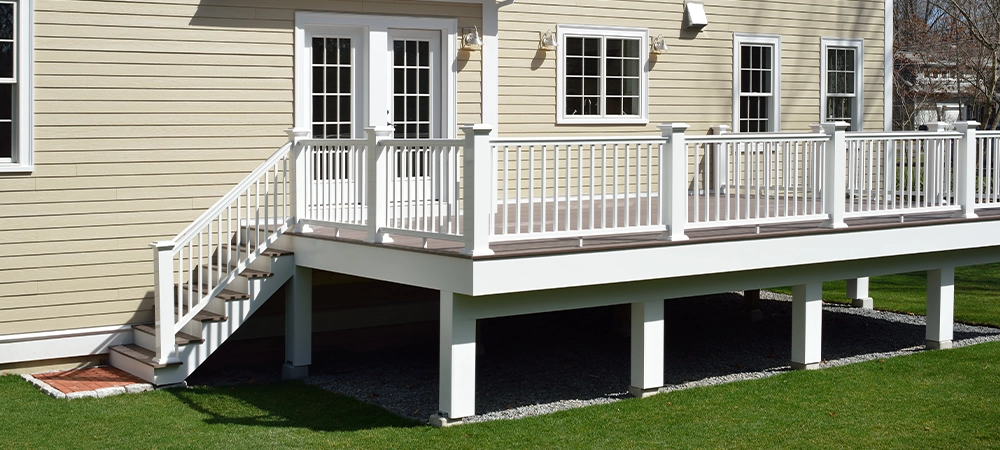
Your deck railing should support daily use, feel secure, and complement your home’s style. Consider durability, maintenance, safety codes, and design preferences.
Working with professionals helps avoid mismatched materials and ensures your railing is installed correctly and safely.
Ready to upgrade or install a new deck railing? Contact Green Side Up Contracting for deck railing ideas and a free consultation.
Frequently Asked Questions
What is the most durable and low-maintenance railing material?
Aluminum and composite railings are among the most durable options, resisting weather damage, rot, and insects while requiring minimal maintenance — no staining, sealing, or frequent repairs.
Are glass railings safe for residential decks?
Yes. Tempered or laminated glass panels meet safety standards when installed properly. Frameless glass deck railing options are also available, offering sleek, unobstructed views while maintaining safety.
Do cable railings meet building codes?
They can, provided cables are properly tensioned and spaced according to local safety codes (typically no more than 4 inches apart). Professional installation is strongly recommended to ensure compliance and safety.
Can I mix railing materials on one deck?
Yes. Combining wood posts with metal, glass, or composite panels is common to balance style, durability, and budget.
How long do wood railings typically last?
With proper maintenance — including regular sealing, staining, and inspection — wood railings can last 10 to 20 years.
Can I upgrade railings without replacing the deck?
Yes. If the deck structure is sound, railings can be replaced independently. This is a cost-effective way to update the look and safety of an existing deck.
Are childproof and pet-proof railing options available?
Yes. Childproof deck railing systems with tight baluster spacing, glass railing systems, and pet-proof railing designs like cable railings with close cable spacing are excellent options for families with young children and pets. Installing childproof gates and using durable, low-maintenance deck railing materials further enhance safety and convenience.
Can I add lighting to my deck railing?
Yes. Incorporating deck railing with lights, such as LED or solar post cap lighting, during installation improves both safety and ambiance for evening use.
How do you install stair railings?
Most modern railing systems offer adjustable brackets or panels for stairs. Accurate measurement and secure attachment are essential for safety.